
Read AI-generated SQL queries without missing the mistakes
AI drafts SQL fast, but chat windows hide the bugs. Here is how a dedicated markdown reader makes CTE-heavy queries safe to review before you run them.
AI assistants have become the default way most engineers draft SQL. You describe the shape of the data, and Claude or ChatGPT returns a query that is usually eighty percent right. The problem starts when the answer is three hundred lines long, wraps a dozen CTEs, and arrives in a chat window that treats code like decoration. You need to read it carefully before you run it against production, and the reading step is where most tools fall apart. A markdown reader built for AI output changes the economics of trusting a generated query, because the review is faster and the mistakes are easier to catch.
Why chat windows fail SQL readers
Chat interfaces optimize for conversation flow, not code review. The code block sits inside a scrolling thread, competing for attention with the model's prose explanation. Line numbers are missing, horizontal scroll is cramped, and copying the block often picks up stray backticks or smart quotes that break the parser later. If you want to compare two versions of a query, you end up with two browser tabs and a lot of mental tab switching.
The worst part is syntax highlighting. Most chat UIs use a single theme optimized for JavaScript, so SQL keywords, string literals, and function names all end up in the same muted palette. That makes it hard to spot a mistyped JOIN condition or a forgotten GROUP BY. Reading a complex query this way is slow and error prone, and it gets worse the longer the query. A dedicated reader like Prism MD treats the code block as the main event: the prose explanation shrinks politely, the query gets room to breathe, and the highlighting is tuned for the shape of SQL specifically.
What a SQL-friendly reader does differently
The baseline is proper syntax highlighting across the dialects you use day to day. A SQL answer from an AI assistant is rarely a one line SELECT, so the reader has to carry its weight across every dialect your warehouse touches. Dialect coverage is the floor, not the ceiling, and the useful readers go further with structural rendering, inline search, and consistent typography. A reader worth installing covers at least:
- Postgres and standard ANSI SQL for most warehouse work
- MySQL and SQLite for application databases
- BigQuery and Snowflake for analytics workloads with their own function sets
Keywords in one color, identifiers in another, string literals in a third, numbers distinct from both. Function names like COALESCE or DATE_TRUNC should pop so you can scan for them, and CTE names should feel like named sections rather than more noise. Line numbers matter more than people admit, because when a teammate asks about line 47 you want to find it in one glance. Monospaced fonts matter too, and a readable mono like JetBrains Mono or Berkeley Mono prevents the transcription mistake where you misread an uppercase O as a zero inside a hashed identifier. Line wrapping is the other quiet killer, since SQL queries get long and a reader that soft wraps without breaking the indentation hierarchy saves you from infinite horizontal scrolling on a laptop.
Reading a CTE-heavy query without losing the thread
Modern AI assistants love common table expressions. A single answer can nest five or six CTEs that each build on the previous one, and the structure is usually correct, but following the data flow in your head takes effort. Three habits make this manageable, and all three get easier inside a proper reader. First, read the CTEs in order and ignore the final SELECT until you understand each stage. Second, name the shape of the output of each CTE in a sticky note or an outline sidebar before moving on. Third, use the reader's search to jump between the definition of a CTE and the places it is referenced.
Prism MD's outline view treats each H2 and H3 in the model's explanation as a jump target, so if the AI wrote headers like "Step 1: aggregate daily revenue" above each CTE, you get a clickable table of contents for the query itself. For long queries that is the difference between twenty minutes of reading and five, and the pattern scales to any query the AI will throw at you. The outline becomes a map of the data flow, and the map is what you share with the teammate who needs to review the query before it ships. Over time the outline habit changes how you prompt, since you start asking the model to emit headers around each stage so the reader can structure the answer for you.
Checking for the three failure modes
AI-generated SQL fails in predictable ways. Reading the query inside a focused environment makes each failure easier to catch, and the three dominant failure modes are worth memorizing before you ever click run. Each one hides in a different part of the query, and each one has a cheap check that catches it inside a dedicated reader. The failure modes to scan for are:
- Silent correctness bugs where the join cardinality is wrong and totals quietly double.
- Dialect drift where a Postgres idiom lands inside a Snowflake query.
- Cost and permission problems where a
SELECT *against a petabyte table slips through.
Silent correctness is the one that burns the most hours. Scan every JOIN carefully, because a LEFT JOIN against a many to many relationship almost always needs a DISTINCT or a window function to collapse the duplicates. Dialect drift is subtler, since the model may have been trained on more Postgres than Snowflake and will cheerfully use DATE_TRUNC('week', ...) where your warehouse wants DATE_TRUNC(week, ...). A reader that lets you flip the highlighter between dialects helps you spot this before you waste a run. Cost problems are the easiest to miss and the most expensive to ignore, so reading the query away from the run button gives you time to add a LIMIT, a date filter, or a sample clause before it ever hits the warehouse.
A workflow that scales past one query
The engineers who get the most out of AI for SQL treat the conversation as a library, not a disposable scratch pad. Each useful query goes into a markdown file with the problem statement, the final query, and one or two sentences on why this version worked. Over a few weeks you accumulate a personal reference that reads better than most internal wikis, and the archive becomes the thing you reach for before the AI itself. A dedicated reader makes this archive practical, since you can search across saved conversations, group them by project, and open the right one before you ask a follow up question. Pair that with the usual version control hygiene and you have a workflow that compounds instead of resetting every morning.
FAQ
Does Prism MD run the SQL for me? No. Prism MD is a reader. It renders the query, the explanation, and any accompanying diagrams, then hands off to your preferred query runner. That separation is intentional, because a reader that executes code is a reader that owns your credentials, and that is a trade most data teams are not willing to make. The practical workflow is to review the query in Prism MD, copy it, and paste into DBeaver, DataGrip, or your warehouse console once it survives the review.
Which SQL dialects does the highlighter support? The Prism highlighting engine covers the common dialects you see from AI assistants: Postgres, MySQL, SQLite, BigQuery, Snowflake, and standard ANSI SQL. Dialect specific functions still render as function calls even if the exact token is not in the dictionary, so nothing becomes unreadable because your warehouse is exotic. Window functions, CTEs, and lateral joins all render with proper indentation. If your team lives inside Redshift or ClickHouse, the ANSI fallback keeps the query legible without you fiddling with settings.
Can I copy a query without the explanation? Yes. Code blocks have their own copy button, so you can lift the query cleanly without picking up stray backticks or prose. The clipboard output is plain text, which parses correctly in every query runner tested, and the formatting survives a round trip through most editors. That matters when a teammate wants the query pasted into Slack without a wall of model commentary around it.
Does it work on mobile? Yes. The reader is responsive, and long queries soft wrap on a phone without destroying the indentation. For code review on the go that matters more than any other feature, and it is the reason most data folks who try it keep the app pinned to their home screen. Pair it with a hardware keyboard on a tablet and you have a serviceable review environment for a short flight or a quiet morning away from the laptop.
Read your AI-generated SQL without the chat-window friction
Free to start — no credit card.
Related reading
How to Handle Extremely Long Code Blocks in AI Answers
8 min read · ai-workflow · markdown

How to Extract Code Blocks From AI Conversations Into Runnable Files
7 min read · ai-workflow · markdown
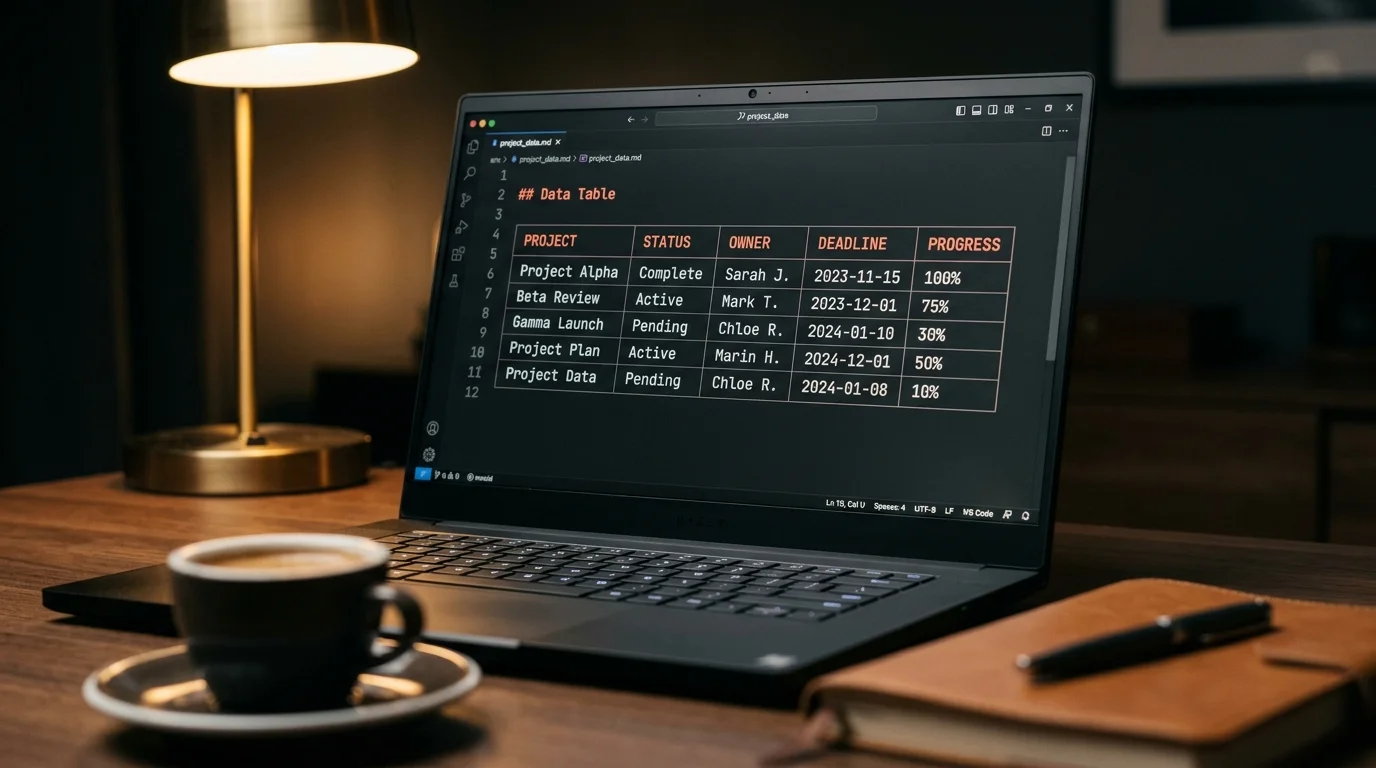
How to Read AI-Generated Tables From ChatGPT and Claude Without Losing Column Alignment
6 min read · markdown · ai-workflow
Ready to read your own AI documents?
Open ChatGPT, Claude, Gemini, or any markdown file in the reader built for the way models write.
- ✓Renders code, math & Mermaid out of the box
- ✓Works offline once you've opened a doc
- ✓Free forever for personal reading